Movement with Meaning

Real people are never still. Gesture and movement are part of our language. They usually complement what’s being said, but they can also tell us things the speaker didn’t mean for us to know. Our experience of people guides our interpretation. Because readers come equipped to understand body language, writers can use it to show rather than tell. We don’t want to clutter the page with insignificant movements that readers will simply tune out (see Resisting Your Own Autosuggest), but well-chosen gestures and movements present opportunities for writers:

1. Enriching Character. Distinctive, authentic gestures convey personality. We recognize people by the way they do things. In Donna Tartt’s The Goldfinch, when Boris pulls his chin back or pinches his nostrils shut, we feel that we know him. Only he would blow his nose sloppily, inspect the contents of the Kleenex and wince (p. 564). Body language can also open up depth, especially in characters reluctant to reveal themselves. When Boris leaves Theo behind in that scene – “his gait loosening and lightening as soon as he thought he was out of my view” (p. 565) – we immediately grasp that Boris has been hiding something from Theo and realize how tenuous their bond has become.

2. Invoking Sympathy. Small movements can be a subterranean way of engendering sympathy for characters who evoke a mixed response. An example here could be an embittered woman speaking hard truths to a child, but having that woman’s hands open for a moment, then close as if with regret. Imagined actions can be even more subtle – those considered and not taken – as contemplated within a close point of view. In Olive Kitteridge by Elizabeth Strout (p. 180): “She would like to rest a hand on Marlene’s head, but this is not the kind of thing Olive is especially able to do. So she goes and stands near the chair Marlene sits on, gazing out that side window there, looking down at the shoreline….” Olive’s urge to touch Marlene makes her sympathetic, but her inability to do so is heartbreaking.

3. Creating Layers. Gestures and staging can contrast with narration and dialogue to set up an unreliable narrator, in books such as Gone Girl by Gillian Flynn and The Girl on The Train by Paula Hawkins. They act as our clues. Contrasts like these can also be mined for irony and humor or built up to increase the tension. Jennifer Egan does both in A Visit from the Goon Squad (pp. 180-183) when, in contrast to the typical back and forth of an entertainment interview, the reporter keeps taking little inappropriate actions such as staring at the movie star’s legs. Finally, he experiences an urge to push her back on the grass and then does, which launches a scene of full-blown action, while retaining the tone of dark absurdist comedy.

4. Marking Transitions. Movement can be of great practical use to a writer. For instance, small actions can be used in place of attributions like “said.” Movement draws the reader’s attention; we assume whoever moves is the one who speaks. Similarly, gestures can help us to transition between current time and memory or between dialogue and thought. Not only does movement draw the eye, a gesture can carry a sense of intimacy that invites us deeper. In Colum McCann’s Let the Great World Spin (p. 330), we move seamlessly from outside to inside the character of Jaslyn: “She rubs her hands together, nervously. Why, still, this small feeling of tightness at her core?”

5. Inspiring Discoveries. Gestures are easy for writers to improvise – to try on, if you will. They may open up paths we didn’t know we were on. They encourage us to surprise ourselves by making our scenes more real and vivid and may lead us to unexpected discoveries. All of us – writers as well as readers – interpret body language without consciously meaning to. Remember always to picture how your characters would move as they speak and listen and think, and you may find yourself learning something important and new about them.


Have Your Cake and Tension Too

Tension is key to keeping readers engaged, no matter what type of novel you’re writing. The tension can be overt and driving, as in a mystery, thriller or sci fi fantasy adventure, or it can be subtle and pervasive, as in a more literary novel. We read to see all sorts of tension resolved. But happy or fun moments may also be an important part of your story. The trick is how to design the happier scenes so that they augment, rather than diminish, the ongoing tension.

1. Happiness under threat

Happiness under time pressure or other threat acts to increase the tension. In The Time Traveler’s Wife by Audrey Niffenegger, the central characters Henry and Clare share many joyful and tender scenes, but the tension never eases. Henry’s involuntary time traveling may whip him away at any second, putting their happiness under constant threat. Niffenegger figured out a clever way to fracture the implications of mortality. But you can accomplish a similar effect without resorting to time travel, and endangered romance doesn’t need to be your central plotline. Generally speaking, if someone or something which your main character cares about is threatened by other characters or further developments, then that happiness will add to the stakes. Your readers can enjoy the fun as it unfolds, but will keep reading to make sure it continues – or returns.

2. Humor

We’re all familiar with the idea that humor breaks tension. Readers love to laugh with characters under pressure as they make wry comments on what confronts them, or at them as they make crazy mistakes. Tension sets us up for humor because of the contrast between the big picture and the smaller, wonderfully human response. Humor can also be quite revealing. Fortunately, to break tension doesn’t mean to end it, as long as the larger reasons for the tension haven’t been undermined. In The Corrections, Jonathan Franzen has his characters act out hilariously as part of their own nervous reaction to tension, and in doing so make everything worse. The same is true in White Teeth by Zadie Smith and Middlesex by Jeffrey Eugenides. If you make sure to keep your characters under pressure and out of balance, then a bit of humor can slightly relieve your readers’ nerves without letting them off the hook.

3. Hope

At the midpoint of a novel, the plot arc typically crests when the main character’s experiences to that point begin to succeed in moving him or her toward change. The challenges of the external plot lead to an internal moment of enlightenment at the midpoint, which opens the way in the external plot from the fear of change to the courage to fight. Assuming your protagonist has been in resistance to the thematic truth driving your novel – as further discussed in my post on The Truth Behind Fiction – then this is where that resistance begins to break. The moment of enlightenment also makes possible a special kind of scene, often referred to as a period of grace. We get a glimpse of what might be possible for the character if only he or she would be willing to change and grow. You might be concerned that this would reduce the tension, and it can if the character has nothing further to accomplish, but if instead the biggest change has only happened inside the character and he or she still has to take action to fulfill the goals of the plot, then a grace period will actually increase the stakes and magnify the tension.

All these techniques depend on crafting your happy, humorous, and hopeful moments to be integral to the main character and reflective of the deepest thematic truth of your story. They shouldn’t read like a side show or commercial break. Your protagonist may start in resistance to your truth, but the possibility of happiness can create stakes, humor can reveal character, and hope can propel us toward real change.


Making a Moment Count

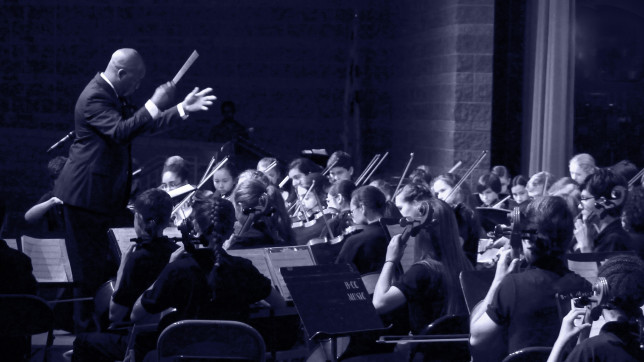
Bring up the music, cue the lights, zoom in the camera – when movie directors want to make a moment bigger, they can bring a lot of tools to bear. Writers only have words, but that doesn’t mean they can’t invest a moment with similar power. Orchestrating the score is part of crafting a novel: making some moments bigger and others smaller, changing pace, holding a note, building to a crescendo, and quieting down. Making a moment count isn’t simply a question of content. Writers can also use the rich harmonics of storytelling.

1. Rhythm and Beat

Every word in a sentence has its own beat. Every sentence in a paragraph imparts rhythm. Every paragraph in a chapter, every chapter in a book. Writers hear this instinctively. The words we choose and how we order them create a kind of music. For example, when the action in your book speeds up, you want your sentences to reflect this by getting shorter and quicker. When the action slows, you want your sentences to stretch. Storytelling is at base an oral tradition. Research shows that as we read, we speak the words aloud in our head. (In the Brain, Silent Reading is the Same as Talking to Yourself.) Rhythm is an integral part of how writers coax others to listen and believe. To make a moment count, pay attention to the rhythms building up to it, and try to push them to open up and expand. But letting the pace slow doesn’t mean you have to lose tension. If it helps, think of the tension driving the scene as a note you’re sustaining in the midst of an increased complexity of sound.

2. Time and Details

Longer sentences not only slow the pace, they sink us in time. They reflect that our characters are caught in a moment and time seems to suspend. Details stand out that they wouldn’t have noticed before. Racing down a hall, your protagonist wouldn’t notice the sweat on his lover’s face, but hiding in a dark corner, dead silent, two inches away from each other, he’d notice the way a droplet pools over her lip that she doesn’t dare wipe away. In this way, a moment can enlarge even in the middle of action. A world within a world seems to blossom. In terms of music, details make me think of Mozart: all those wonderfully precise notes.

3. Depth

Depth is essential to making a moment bigger. For a moment to matter, it must hold stakes for your characters. Your readers need to know that, but this doesn’t have to be a “tell.” You can include details or images that evoke something we know about from earlier in the novel. You can use revealing gestures that give a character’s feelings away. You can add metaphor, either one that carries power on its own or that expands on a previous metaphor – preloaded with meaning. Or you can summon up a vivid memory tied to the senses or captured in a fragment of scene. In other words, to make a moment count, consider deepening to intensify, rather than increasing the action – an emphasis on the vertical as opposed to the horizontal. Let us hear the deep bassoon, the double bass.

4. Restraint

I know this may seem counter-intuitive, but restraint can be more powerful – and sympathetic – than extreme drama. Hyperbole and histrionics can turn readers off. Rather than forcing a moment to be bigger with sobbing characters or lots of pushy adjectives and adverbs, try to build your way up with strong verbs and specific nouns. If this seems difficult, don’t worry when you write your first draft, but later try removing most of the adjectives and adverbs to see what you have left and rebuild from there. The simple, strong melody at the heart of your scene is often the most moving.

More than anything else, remember to listen as you write. Listen and trust your ear.

Photo courtesy of woodleywonderworks via a Creative Commons License.