
Trees Falling Unheard

Philosophers ask whether a tree falling in a forest makes a sound if no one hears it. A different question is closer to my heart: does writing matter if no one reads it? I must admit to believing in the importance of readers to completion of the art that is writing. Hungry Writers and Smart Readers. Printed words are meant to be read. But likewise songs are meant to be heard, and yet I defy anyone to dispute the value of someone singing her heart out in that lonely forest of falling trees. Would we feel differently if she were writing and left her words behind unread? I want to believe the act of writing still matters, for reasons personal, professional and profound.

Personal. At the simplest level, writing is a form of play. Remembering to Play Pretend. We do it because we love it – at least that’s how it starts. Sometimes we may lose track of that along the way. We need to keep reminding ourselves that writing is a joy. Writing can also help us to make sense of our lives. In The Artist’s Way, Julia Cameron suggests writing daily morning pages as a way to open up pathways from the brain to the page. Whether as journal or fiction, writing provides us with a place to air grievances, share insights, confide worries and express happiness. Putting words to our feelings gives us a sense of release.

Professional. We learn to write by writing. Leading Against Your Strengths. Writing is a muscle that requires use to grow stronger. Failure teaches us, as well as success. And practically speaking, as long as it was yours in the first place, you can always steal from yourself. That minor character you once had to abandon may turn into the protagonist of a brand new piece. With computers, you can easily keep your darlings. You never know what new work your old may inspire.

Profound. Writing fiction is an act of sympathetic imagination. The Poetry in Prose. We take on the perspective of other human beings and look at life through their eyes. We open ourselves up to possibilities that we wouldn’t otherwise face. We extend ourselves outward by sinking deeper inside. Writing as Full Body Experience. Our words may be never be read by someone else, and yet we ourselves are changed. In addition, the effort to capture insight in words is, like other arts, an outward expression of internal vision. An attempt to create something new and unique. A Still Center. With or without an audience, that’s a profoundly spiritual act.

So, does writing matter if no one reads it?

Of course it does.
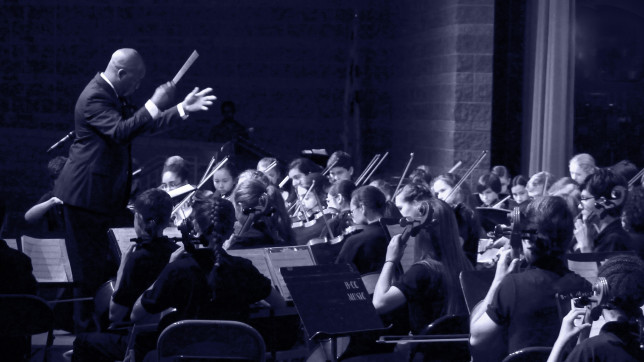


Making a Moment Count

Bring up the music, cue the lights, zoom in the camera – when movie directors want to make a moment bigger, they can bring a lot of tools to bear. Writers only have words, but that doesn’t mean they can’t invest a moment with similar power. Orchestrating the score is part of crafting a novel: making some moments bigger and others smaller, changing pace, holding a note, building to a crescendo, and quieting down. Making a moment count isn’t simply a question of content. Writers can also use the rich harmonics of storytelling.

1. Rhythm and Beat

Every word in a sentence has its own beat. Every sentence in a paragraph imparts rhythm. Every paragraph in a chapter, every chapter in a book. Writers hear this instinctively. The words we choose and how we order them create a kind of music. For example, when the action in your book speeds up, you want your sentences to reflect this by getting shorter and quicker. When the action slows, you want your sentences to stretch. Storytelling is at base an oral tradition. Research shows that as we read, we speak the words aloud in our head. (In the Brain, Silent Reading is the Same as Talking to Yourself.) Rhythm is an integral part of how writers coax others to listen and believe. To make a moment count, pay attention to the rhythms building up to it, and try to push them to open up and expand. But letting the pace slow doesn’t mean you have to lose tension. If it helps, think of the tension driving the scene as a note you’re sustaining in the midst of an increased complexity of sound.

2. Time and Details

Longer sentences not only slow the pace, they sink us in time. They reflect that our characters are caught in a moment and time seems to suspend. Details stand out that they wouldn’t have noticed before. Racing down a hall, your protagonist wouldn’t notice the sweat on his lover’s face, but hiding in a dark corner, dead silent, two inches away from each other, he’d notice the way a droplet pools over her lip that she doesn’t dare wipe away. In this way, a moment can enlarge even in the middle of action. A world within a world seems to blossom. In terms of music, details make me think of Mozart: all those wonderfully precise notes.

3. Depth

Depth is essential to making a moment bigger. For a moment to matter, it must hold stakes for your characters. Your readers need to know that, but this doesn’t have to be a “tell.” You can include details or images that evoke something we know about from earlier in the novel. You can use revealing gestures that give a character’s feelings away. You can add metaphor, either one that carries power on its own or that expands on a previous metaphor – preloaded with meaning. Or you can summon up a vivid memory tied to the senses or captured in a fragment of scene. In other words, to make a moment count, consider deepening to intensify, rather than increasing the action – an emphasis on the vertical as opposed to the horizontal. Let us hear the deep bassoon, the double bass.

4. Restraint

I know this may seem counter-intuitive, but restraint can be more powerful – and sympathetic – than extreme drama. Hyperbole and histrionics can turn readers off. Rather than forcing a moment to be bigger with sobbing characters or lots of pushy adjectives and adverbs, try to build your way up with strong verbs and specific nouns. If this seems difficult, don’t worry when you write your first draft, but later try removing most of the adjectives and adverbs to see what you have left and rebuild from there. The simple, strong melody at the heart of your scene is often the most moving.

More than anything else, remember to listen as you write. Listen and trust your ear.

Photo courtesy of woodleywonderworks via a Creative Commons License.


Pitch with Irony and Heart

Writers are all about finding the right words, but many have trouble when it comes to pitching their novel to others. They may have heard that they’re supposed to have a logline with a hook, but what does that really mean? Is it something that only applies to screenwriting, or to genre and literary fiction as well? Is there a way to do this that doesn’t end up sounding so superficial, it’s painful to say?

Nothing can eliminate all the angst and awkwardness here, but I’d like to offer a few suggestions that may help.

Irony is key to a good hook. Agents, editors and prospective readers have busy lives and lots of choices about what to read, so the goal of a pitch is to be compelling and succinct. A “logline” refers to a one-sentence description of plot, with a “hook” to catch people’s attention. The concept comes out of Hollywood, but it can be adapted to form the base of your pitch. Fortunately for us non-Hollywood writers, that doesn’t mean you need special effects. What we’re really talking about is irony. The way your protagonist expects to face one thing, but it’s actually something much different (and bigger). Or the way your protagonist starts out in resistance to the goals of the plot. Irony hooks your audience by setting them up for more conflict and complication to come. They want to read on to see how it resolves. As long as you’re not in Hollywood, don’t be concerned if this takes you a couple of sentences rather than one.

The truth driving your book gives it heart. As I discussed in my post on The Truth Behind Fiction, your own truth underlies your writing even if you don’t always realize it. We’re drawn to a particular character or sequence of events because they connect with something about life that we long to express. Ask yourself, what is it about this that matters so much to me? What is it that I most want these characters, and my readers, to hear? The deepest, most resonant truth of your novel should be part of your pitch. (See The Truth Behind Fiction for examples.)

A well-written pitch matters. Your pitch is the first evidence that you can write, so do yourself justice. Good writing includes deft word choice and appealing cadence. Active verbs help to convey that things happen in your book. You also want to be true to your work. If your pitch exaggerates your plot beyond recognition, you won’t be doing yourself any favors. You need to find the right balance between catchy and accurate. It can be easy to get carried away. Lastly, you should try to make it natural to say. For this, I recommend practicing different versions out loud with family and friends. Even if your pitch will usually be in writing, it’s important to be able to say it to others without being self-conscious.

In the end, your pitch should feel like a concentrated outward projection of your novel, true to its plot line, steeped in its irony, imbued with its depth.