
Pitch with Irony and Heart

Writers are all about finding the right words, but many have trouble when it comes to pitching their novel to others. They may have heard that they’re supposed to have a logline with a hook, but what does that really mean? Is it something that only applies to screenwriting, or to genre and literary fiction as well? Is there a way to do this that doesn’t end up sounding so superficial, it’s painful to say?

Nothing can eliminate all the angst and awkwardness here, but I’d like to offer a few suggestions that may help.

Irony is key to a good hook. Agents, editors and prospective readers have busy lives and lots of choices about what to read, so the goal of a pitch is to be compelling and succinct. A “logline” refers to a one-sentence description of plot, with a “hook” to catch people’s attention. The concept comes out of Hollywood, but it can be adapted to form the base of your pitch. Fortunately for us non-Hollywood writers, that doesn’t mean you need special effects. What we’re really talking about is irony. The way your protagonist expects to face one thing, but it’s actually something much different (and bigger). Or the way your protagonist starts out in resistance to the goals of the plot. Irony hooks your audience by setting them up for more conflict and complication to come. They want to read on to see how it resolves. As long as you’re not in Hollywood, don’t be concerned if this takes you a couple of sentences rather than one.

The truth driving your book gives it heart. As I discussed in my post on The Truth Behind Fiction, your own truth underlies your writing even if you don’t always realize it. We’re drawn to a particular character or sequence of events because they connect with something about life that we long to express. Ask yourself, what is it about this that matters so much to me? What is it that I most want these characters, and my readers, to hear? The deepest, most resonant truth of your novel should be part of your pitch. (See The Truth Behind Fiction for examples.)

A well-written pitch matters. Your pitch is the first evidence that you can write, so do yourself justice. Good writing includes deft word choice and appealing cadence. Active verbs help to convey that things happen in your book. You also want to be true to your work. If your pitch exaggerates your plot beyond recognition, you won’t be doing yourself any favors. You need to find the right balance between catchy and accurate. It can be easy to get carried away. Lastly, you should try to make it natural to say. For this, I recommend practicing different versions out loud with family and friends. Even if your pitch will usually be in writing, it’s important to be able to say it to others without being self-conscious.

In the end, your pitch should feel like a concentrated outward projection of your novel, true to its plot line, steeped in its irony, imbued with its depth.


The Corrections

Franzen, Jonathan. The Corrections. Farrar, Straus & Giroux (New York: 2001).

The Corrections A brilliant, wide-ranging novel book about a disintegrating family: a managing mother obsessed with getting her adult children home for Christmas as if it could save her life; an autocratic father plummeting into dementia; a pompous son disturbingly dependent on his manipulative wife; a creative daughter prey to self-destructive impulses; and a clever youngest son, victim of his own bad choices. All desperate, all lost, yet grasping at life, they’re rendered so honestly and vividly that the reader can’t help but sympathize. They lurch toward each other, resisting all the way.

For writers: Franzen is exceptional at writing in an extremely close third-person voice, using free indirect style. He doesn’t simply translate his characters; he seems to pull the words right out of their heads. He once confessed to touch-typing his work while wearing earplugs and a blindfold to help him go deep. Try reading a chapter of his, then your own work, to learn what you could do to bring yours closer.


Remembering To Play Pretend

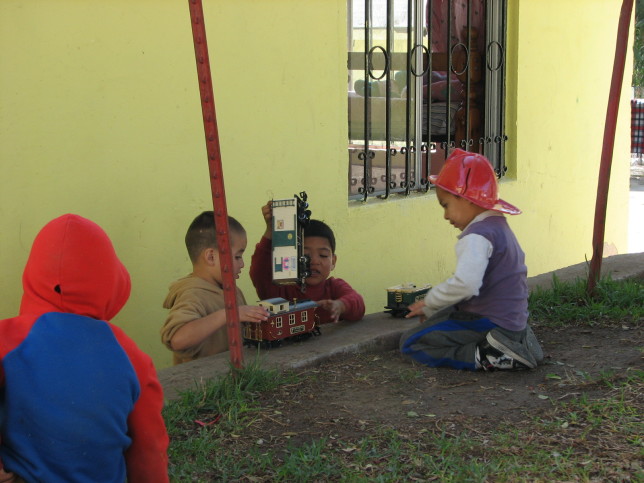
If you’re a writer, then I’m guessing you played pretend when you were a kid. Your dolls had distinct voices, your trucks, loads of attitude. Your forts housed secret heroes in hidden rooms. If you had a stick, you could have a character. Some of you may have even had imaginary friends. I did. I once begged to return to my grandparents’ house because I’d forgotten to bring home my ‘visbul friends. My parents just laughed, but the next time we visited, I was relieved to find my friends hanging out in my grandparents’ basement. I never actually pictured their bodies – personality was enough. They were big talkers, my friends. I supplied all the dialogue, of course, but that wasn’t how it seemed to me then.

So much of our creative process as adults seems to center on rules and restrictions. Writers may not mean to intimidate each other into normative behavior, but sometimes I’m concerned that we do. Use third person, not first, if you’re a serious writer. Don’t vary your point of view. Never use backstory. Show, don’t tellDon’t use serial commas. Don’t forget serial commas. The list goes on. But with first drafts especially, forgetting about the rules and being willing to experiment is essential. You want to remember how to play pretend.

1. Keep asking “What if?”

“What if?” is at the heart of all games of pretend – really, of all acts of creation. The way I kicked things off as a kid was “I’ll be….” I’ll be this lion tamer – at a circus – and the lions will secretly be my friends. We’ll go on adventures. And you – you can be a monkey who turns into a human at night. You get in trouble – no, you overhear the owner. He’s a crook and no one can stop him, but us…. Writing first drafts is like that. Free-wheeling, open, changeable, exciting. You take on a part, imagine the place, the challenges, the other players, and you go. I don’t mean you can’t outline. But you don’t want to worry if you’re getting it “right.” Instead of crappy first drafts, try thinking of crazy first drafts. Glorious, all-in, no-holds-barred first drafts. Be a kid.

2. Inhabit the moment

Inhabit the moment – be fully there in your mind. When kids play pretend, they don’t let normal things break the spell. The room or yard and everything in it become part of the make-believe world. When you’re writing a first draft, try to recreate that feeling. Be present in your work. Sink all the way in. Take on the mind set of your main character and see what’s around you, sense it, feel it, notice how it affects you. Truly hear what others say. Write it all down. This is your raw material – you can shape it later.

3. Trust yourself

As writers, we have to cycle through more than one stage in our work. We need to be open to criticism – to hear what others tell us – to continue to learn. We need to edit our own work with honesty and detachment. We need to be professionals who hold ourselves up to high standards and who can handle the business aspects of our careers with aplomb. But when it comes to first drafts, it’s time to put all that aside. We can’t edit before we’ve even let ourselves create. We have to remind ourselves that this is something we love. Trust your own talent. Let yourself be young.

You may just find the only hard part is typing fast enough.

Does a way you played as a kid ever come to mind when you write? Please feel free to comment.