
Trees Falling Unheard

Philosophers ask whether a tree falling in a forest makes a sound if no one hears it. A different question is closer to my heart: does writing matter if no one reads it? I must admit to believing in the importance of readers to completion of the art that is writing. Hungry Writers and Smart Readers. Printed words are meant to be read. But likewise songs are meant to be heard, and yet I defy anyone to dispute the value of someone singing her heart out in that lonely forest of falling trees. Would we feel differently if she were writing and left her words behind unread? I want to believe the act of writing still matters, for reasons personal, professional and profound.

Personal. At the simplest level, writing is a form of play. Remembering to Play Pretend. We do it because we love it – at least that’s how it starts. Sometimes we may lose track of that along the way. We need to keep reminding ourselves that writing is a joy. Writing can also help us to make sense of our lives. In The Artist’s Way, Julia Cameron suggests writing daily morning pages as a way to open up pathways from the brain to the page. Whether as journal or fiction, writing provides us with a place to air grievances, share insights, confide worries and express happiness. Putting words to our feelings gives us a sense of release.

Professional. We learn to write by writing. Leading Against Your Strengths. Writing is a muscle that requires use to grow stronger. Failure teaches us, as well as success. And practically speaking, as long as it was yours in the first place, you can always steal from yourself. That minor character you once had to abandon may turn into the protagonist of a brand new piece. With computers, you can easily keep your darlings. You never know what new work your old may inspire.

Profound. Writing fiction is an act of sympathetic imagination. The Poetry in Prose. We take on the perspective of other human beings and look at life through their eyes. We open ourselves up to possibilities that we wouldn’t otherwise face. We extend ourselves outward by sinking deeper inside. Writing as Full Body Experience. Our words may be never be read by someone else, and yet we ourselves are changed. In addition, the effort to capture insight in words is, like other arts, an outward expression of internal vision. An attempt to create something new and unique. A Still Center. With or without an audience, that’s a profoundly spiritual act.

So, does writing matter if no one reads it?

Of course it does.
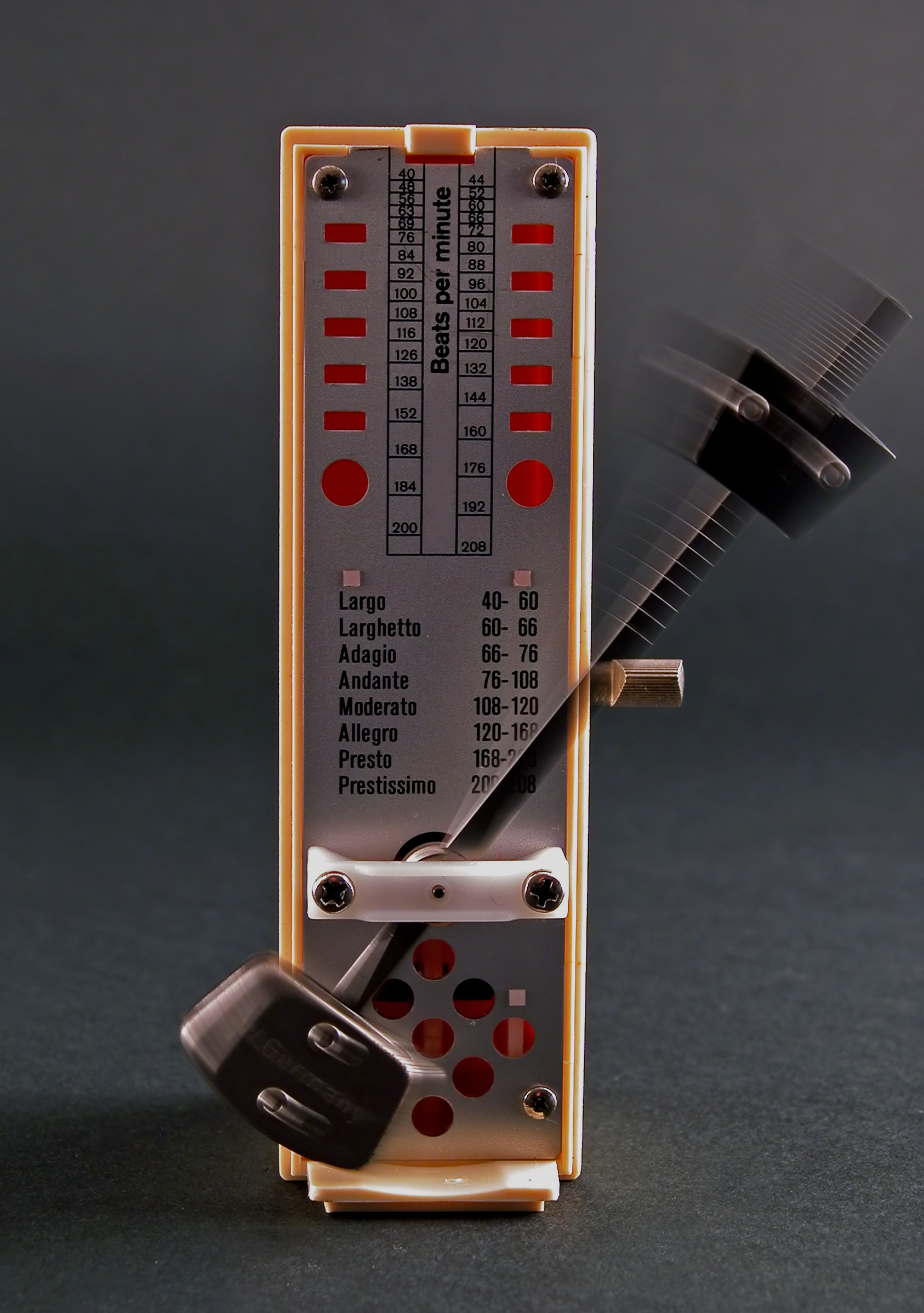


Leading Against Your Strengths

Practice is necessary to the development of skills in every field, from work to sports to Metronomeart. Watching Wimbledon this week reminds me of the hours I put into tennis when I was a kid, tossing balls in the air to practice my serve over chalked marks in the driveway, hitting shots against our uneven garage door. Originally my backhand was lousy, but years of leading with it in practice turned it into my best shot. In Jeremy Denk’s fascinating article on his life in piano lessons (“Every Good Boy Does Fine,” The New Yorker, April 8, 2013), he quoted his teacher, the Hungarian pianist György Sebők, as saying that you don’t teach piano playing at lessons; you teach how to practice. Practice is where the learning occurs. Good students know what they need to drill.

Writing is unusual in that the most intense practice happens in the course of writing drafts. Even if we attend classes, keep a journal or follow writing prompts, the real work of improving our writing takes place on the ground. We practice on the very same pieces that will become our finished product. Everything that goes into that – all the brainstorming, outlining, writing and rewriting – is both part of perfecting a particular manuscript and part of learning our craft.

I’d like to suggest that you structure your approach to new work with a view to pushing yourself in your areas of weakness. I don’t mean that you should tamper with what inspires you, whether you begin with a character, a plot, an insight or something else. My suggestion comes at the next stage, when you begin to outline or brainstorm scenes. If you’re great with character but weak on plot, then push yourself to consider the what if’s of plot – to get some ideas on the table. If you’re great with plot, then try to invest some early work in your characters. If dialog is your best shot, then experiment with action and description. If description, then make your characters talk. We all have to deal with our weaknesses when we’re revising: the idea here would be to increase your awareness of those areas at the outset – not only to enrich the manuscript in front of you, but to work on your mastery of writing skills.

Once your manuscript gets going, you’ll naturally play to your strengths. You won’t be able to help yourself from paying attention to the aspects of writing that you love. But if you start by leading against your strengths, then over time your weaknesses should improve in a more integral way, rather than just being something other people always have to tell you to fix at the end.

You know better than anyone else what needs work. Own it. Drill it. Be brave.


What Makes Us Cry

At the second turn of the Belmont, when American Pharoah opened up his stride and pulled away from the pack, I burst into tears. And I wasn’t alone. In the room, on the screen, over Facebook and Twitter, people were sobbing. Yes, the horse ran a glorious race, but why did we cry? I’ve often wondered the same thing about books. Unlike movies, where the image of people crying stirs a sympathetic response, characters blubbering on the page can make readers detach. Mere sadness isn’t enough. Something more complex and nuanced is required. Books need to earn our tears.

Tears mean the body is involved as well as the mind. Crying comes out of a physical need for release. As readers, we have to care so deeply about the character that the struggle feels like our own. We need to be surprised in a way that gets past our defenses. The character has to want something with primal resonance so the stakes grab us viscerally. Most of all, the writing must stir our souls. Our conscious brains have little to do with it: it’s our bodies that break into tears.

To care so deeply that the problems feel like our own, we have to know and identify with the character. Knowledge comes out of the character being specific and seeming real to us. For this, the writer needs to believe in and care about the character first. Backstory – what brought the character to this point – may be critical to the writer’s connecting with the character, but how much of that to include and when is up to each writer. The important thing here is to write him or her as vividly as you can out of your own deep connection.

Identification is built up through showing a specific character in scene. Even if characters are very different from us, we put ourselves in their shoes when things happen. As they react to events, so do we. This is how identification begins. The reader thinks: if I were her, I’d react that way too. When people talk about a character being sympathetic, it has more to do with our relating to their reactions and desires than it does with lengthy character descriptions.

Readers also need time with a character if they’re expected to care. Writers are often advised to dive into a problem at the start of their book, which can generate a lot of interest and energy, but not usually tears. I’ve been hooked by the tragedies that open some books – such as the death of the mother in The Secret Life of Bees and Swamplandia (these aren’t spoilers: if you flip through their first few pages, you’ll know this before you buy them) – but they don’t make me cry.

The Goldfinch comes close by telegraphing the mother’s death early on, then dropping back to build up to the event in scene, letting us get to know both son and mother before the loss. But this early reveal is more effective at engaging us with the main character – we open up to a more intimate and serious level with him right away – than it is at getting us to cry. We know about the death, so we defend ourselves from caring too much. That takes an element of surprise.

The stakes also have to be big enough. In Save the Cat!, Blake Snyder tells writers to root their plots in primal drives such as survival and hunger – urges so basic they connect with all of us in a visceral way. What the character wants, we feel ourselves wanting too. This is how our identification becomes complete. Add to that obstacles, setbacks, trying and failing, trying again, courage in the face of bad odds. Achieving these wants can’t be easy. Struggle gets to us. Often it’s not a loss, but the sudden success despite everything that moves us to tears.

Finally, the way you tell the story matters. The beat of words, the rhythm of sentences, the infusing of image with meaning. The storyteller’s art. If you want tears, you need to make these moments count. Poor writing can leave readers cold even if all the other elements are there. Beautiful writing almost seems to pull tears out of readers.

I cried about American Pharoah because it had been so long since anyone took the crown (stakes and surprise) and the way he ran showed me that he had heart and that he cared (character). The other horses running meant that he could still lose (struggle). The race even had a kind of rhythm to it – the pound of hooves, the reach of muscles – that stirred me inside (akin to good writing).

I’m also a sap when it comes to horses, but that’s just me.