Making a Moment Count

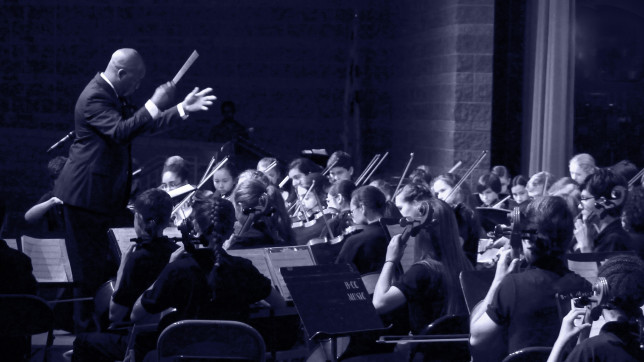
Bring up the music, cue the lights, zoom in the camera – when movie directors want to make a moment bigger, they can bring a lot of tools to bear. Writers only have words, but that doesn’t mean they can’t invest a moment with similar power. Orchestrating the score is part of crafting a novel: making some moments bigger and others smaller, changing pace, holding a note, building to a crescendo, and quieting down. Making a moment count isn’t simply a question of content. Writers can also use the rich harmonics of storytelling.

1. Rhythm and Beat

Every word in a sentence has its own beat. Every sentence in a paragraph imparts rhythm. Every paragraph in a chapter, every chapter in a book. Writers hear this instinctively. The words we choose and how we order them create a kind of music. For example, when the action in your book speeds up, you want your sentences to reflect this by getting shorter and quicker. When the action slows, you want your sentences to stretch. Storytelling is at base an oral tradition. Research shows that as we read, we speak the words aloud in our head. (In the Brain, Silent Reading is the Same as Talking to Yourself.) Rhythm is an integral part of how writers coax others to listen and believe. To make a moment count, pay attention to the rhythms building up to it, and try to push them to open up and expand. But letting the pace slow doesn’t mean you have to lose tension. If it helps, think of the tension driving the scene as a note you’re sustaining in the midst of an increased complexity of sound.

2. Time and Details

Longer sentences not only slow the pace, they sink us in time. They reflect that our characters are caught in a moment and time seems to suspend. Details stand out that they wouldn’t have noticed before. Racing down a hall, your protagonist wouldn’t notice the sweat on his lover’s face, but hiding in a dark corner, dead silent, two inches away from each other, he’d notice the way a droplet pools over her lip that she doesn’t dare wipe away. In this way, a moment can enlarge even in the middle of action. A world within a world seems to blossom. In terms of music, details make me think of Mozart: all those wonderfully precise notes.

3. Depth

Depth is essential to making a moment bigger. For a moment to matter, it must hold stakes for your characters. Your readers need to know that, but this doesn’t have to be a “tell.” You can include details or images that evoke something we know about from earlier in the novel. You can use revealing gestures that give a character’s feelings away. You can add metaphor, either one that carries power on its own or that expands on a previous metaphor – preloaded with meaning. Or you can summon up a vivid memory tied to the senses or captured in a fragment of scene. In other words, to make a moment count, consider deepening to intensify, rather than increasing the action – an emphasis on the vertical as opposed to the horizontal. Let us hear the deep bassoon, the double bass.

4. Restraint

I know this may seem counter-intuitive, but restraint can be more powerful – and sympathetic – than extreme drama. Hyperbole and histrionics can turn readers off. Rather than forcing a moment to be bigger with sobbing characters or lots of pushy adjectives and adverbs, try to build your way up with strong verbs and specific nouns. If this seems difficult, don’t worry when you write your first draft, but later try removing most of the adjectives and adverbs to see what you have left and rebuild from there. The simple, strong melody at the heart of your scene is often the most moving.

More than anything else, remember to listen as you write. Listen and trust your ear.

Photo courtesy of woodleywonderworks via a Creative Commons License.


Remembering To Play Pretend

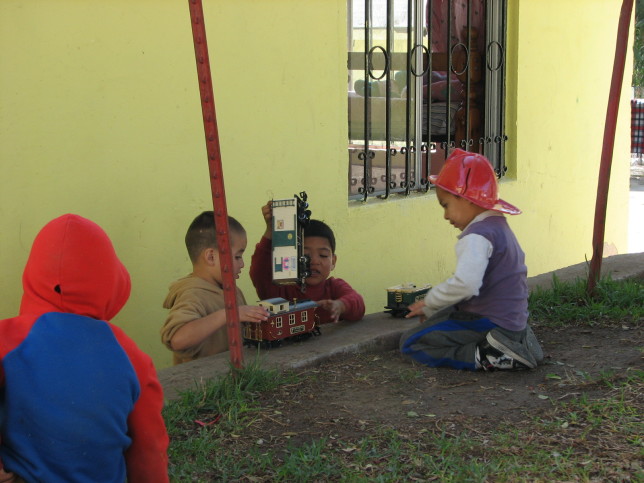
If you’re a writer, then I’m guessing you played pretend when you were a kid. Your dolls had distinct voices, your trucks, loads of attitude. Your forts housed secret heroes in hidden rooms. If you had a stick, you could have a character. Some of you may have even had imaginary friends. I did. I once begged to return to my grandparents’ house because I’d forgotten to bring home my ‘visbul friends. My parents just laughed, but the next time we visited, I was relieved to find my friends hanging out in my grandparents’ basement. I never actually pictured their bodies – personality was enough. They were big talkers, my friends. I supplied all the dialogue, of course, but that wasn’t how it seemed to me then.

So much of our creative process as adults seems to center on rules and restrictions. Writers may not mean to intimidate each other into normative behavior, but sometimes I’m concerned that we do. Use third person, not first, if you’re a serious writer. Don’t vary your point of view. Never use backstory. Show, don’t tellDon’t use serial commas. Don’t forget serial commas. The list goes on. But with first drafts especially, forgetting about the rules and being willing to experiment is essential. You want to remember how to play pretend.

1. Keep asking “What if?”

“What if?” is at the heart of all games of pretend – really, of all acts of creation. The way I kicked things off as a kid was “I’ll be….” I’ll be this lion tamer – at a circus – and the lions will secretly be my friends. We’ll go on adventures. And you – you can be a monkey who turns into a human at night. You get in trouble – no, you overhear the owner. He’s a crook and no one can stop him, but us…. Writing first drafts is like that. Free-wheeling, open, changeable, exciting. You take on a part, imagine the place, the challenges, the other players, and you go. I don’t mean you can’t outline. But you don’t want to worry if you’re getting it “right.” Instead of crappy first drafts, try thinking of crazy first drafts. Glorious, all-in, no-holds-barred first drafts. Be a kid.

2. Inhabit the moment

Inhabit the moment – be fully there in your mind. When kids play pretend, they don’t let normal things break the spell. The room or yard and everything in it become part of the make-believe world. When you’re writing a first draft, try to recreate that feeling. Be present in your work. Sink all the way in. Take on the mind set of your main character and see what’s around you, sense it, feel it, notice how it affects you. Truly hear what others say. Write it all down. This is your raw material – you can shape it later.

3. Trust yourself

As writers, we have to cycle through more than one stage in our work. We need to be open to criticism – to hear what others tell us – to continue to learn. We need to edit our own work with honesty and detachment. We need to be professionals who hold ourselves up to high standards and who can handle the business aspects of our careers with aplomb. But when it comes to first drafts, it’s time to put all that aside. We can’t edit before we’ve even let ourselves create. We have to remind ourselves that this is something we love. Trust your own talent. Let yourself be young.

You may just find the only hard part is typing fast enough.

Does a way you played as a kid ever come to mind when you write? Please feel free to comment.


The Truth Behind Fiction

Fiction is a lie that tells truth – I’ve seen versions of that insight attributed to authors from Albert Camus to Stephen King. What I’d like to emphasize here is that the truth they’re talking about is yours. Your own truth underlies your writing even if you don’t always realize it. The urge to write fiction represents a kind of sounding – you’re drawn to a particular character or sequence of events because they resonate with you. They connect with something deep inside you that yearns to get expressed, something about life that you believe to be important and true. Something that matters intensely to you.

I’m not talking about truisms. In The Kite Runner by Khaled Hosseini, the truth I sense isn’t simply that war is bad or that people can be evil or that Afghanistan is a scary place. If you think specifically of Amir, the protagonist, and his journey, you can feel it pushing at him throughout the story: the evil of others doesn’t acquit you – responsibility is part of love. In Middlesex by Jeffrey Eugenides, in which Calliope, a hermaphrodite, is raised as a girl but emerges from puberty as a man, the truth has more teeth than mere acceptance of self. It’s about accepting what you feel to real and true, however bizarre it may seem. In contrast, consider Life of Pi by Yann Mantel, the story of young Piscine Molitor Patel and his survival on a lifeboat with an adult Bengal tiger, when another layer gets added that makes it seem as if the whole thing was a lie hiding a more desperate reality. But readers know which they feel called to believe. This book makes the case that stories may hold more truth than mere facts.

I don’t know why these truths matter to these authors, but I can tell that they do. These books reverberate with the power and authority of personal truth.

Writers don’t have to be able to articulate this at the outset. What you believe as expressed through your words can be something you discover through your writing. Our most startling insights often happen that way. But at some point, one way or the other, you want to go looking for the deepest connection between yourself, your characters, and your story. Ask yourself, what is it about this that matters so much to me? What is it that I most want these characters, and my readers, to hear?

Dara Marks discusses this in her excellent work on screenwriting, Inside Story – The Power of the Transformational Arc, and her advice applies to writing books for adults and children as well. You want your protagonist to have traits in resistance to your central truth – to need the journey to get there. You want your plot to include circumstances that challenge that resistance until it breaks. She cites John Keats: “Do you not see how necessary a world of pains and troubles is to school an intelligence and make a soul?”

F. Scott Fitzgerald, author of The Great Gatsby and This Side of Paradise, says this in a somewhat daunting letter to a young would-be writer:

I’ve read the story carefully and, Frances, I’m afraid the price for doing professional work is a good deal higher than you are prepared to pay at present. You’ve got to sell your heart, your strongest reaction, not the little minor things that only touch you lightly, the little experiences that you might tell at dinner. . . . This is the experience of all writers. It was necessary for Dickens to put into Oliver Twist the child’s passionate resentment at being abused and starved that had haunted his whole childhood. Ernest Hemingway’s first stories In Our Time went right down to the bottom of all that he had ever felt and known. In This Side of Paradise I wrote about a love affair that was still bleeding as fresh as the skin wound on a haemophile.

You don’t need to share your characters’ same experiences for them to tell a truth that your own life has taught you. But if you aren’t in there somewhere, then you haven’t gone deep enough. Yet.

Photo courtesy of Todd Arkebauer.